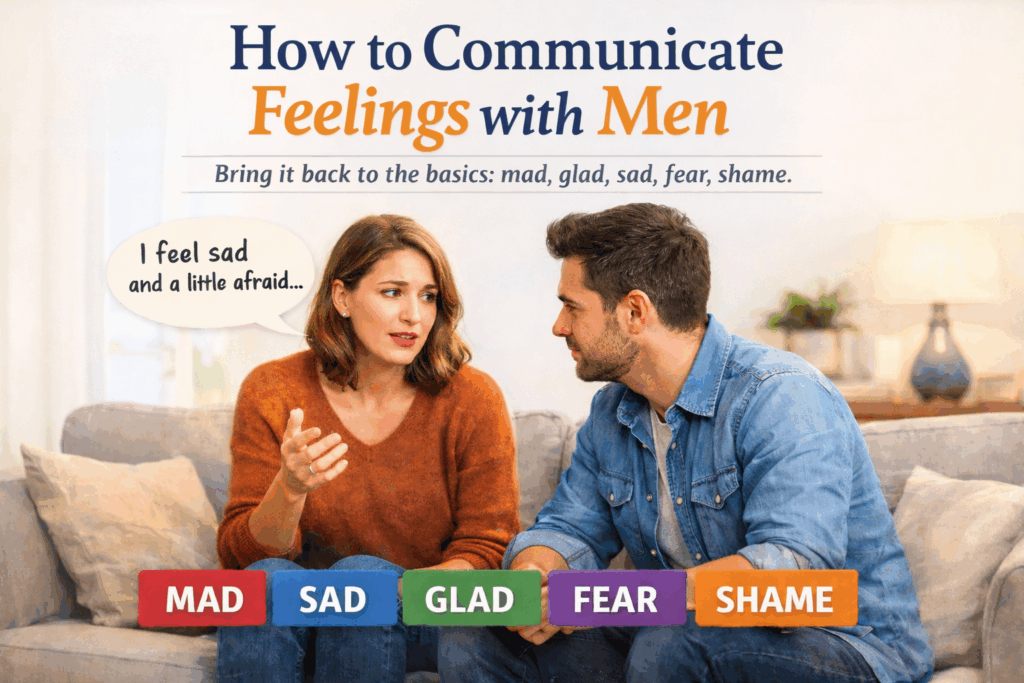
If you feel frustrated because the men in your life don’t understand you when you share your feelings this approach can dramatically improve how you communicate about emotions with men.
A key truth about communication is that much of it is nonverbal. Body language, facial expressions, and context often carry more meaning than words alone. Research consistently shows that women, on average, tend to use a wider range of facial expressions and are more adept at reading subtle emotional cues. Women also tend to be more verbal and often have a larger, more nuanced vocabulary for expressing feelings.
Men, on the other hand, often communicate emotions more simply and directly. This difference isn’t a flaw, it’s just a different communication style. Understanding this gap is where The Clarity Wheel becomes a powerful tool.
Many women experience a rich emotional range that can be difficult for the average man to fully track in conversation. Think of it like speaking different dialects of the same language. When adults speak with children, they naturally slow down, simplify their words, and adjust their communication to be understood. They don’t repeat the same complex language louder, they make it clearer.
The same principle applies when communicating about feelings with men.
Use Five Simple Feeling Words
When emotions are involved, especially during conflict, simplicity works best. We recommend using five core feeling words that are easy to remember and easy to hear:
• Mad
• Sad
• Glad
• Fear
• Shame
These words cover a wide emotional range:
• Boil anger and irritation down to “mad”
• Distill grief, disappointment, or loss into “sad”
• Replace happiness, excitement, or contentment with “glad”
• Use “fear” for anxiety, worry, or uncertainty
• Let “shame” cover guilt, embarrassment, or regret
If you need to express intensity, you can add a number:
“I’m mad at a level 8” instead of “I’m completely exasperated.”
“I’m glad at a level 9” instead of “I’m over-the-moon ecstatic.”
This keeps communication clear without losing emotional truth.
Meet Men Where They Are
The most effective practice is to work with the men you want to connect with emotionally, rather than expecting them to adopt a different emotional language under stress. This is especially important during strong feelings or conflict.
Instead of repeating complaints that haven’t worked, try using what does work: short, clear feeling words. Allow men to use the emotional language that feels natural to them. For many, mad, sad, glad, fear, and shame represent their emotional bandwidth—and that’s okay.
Clear communication isn’t about saying more. It’s about being understood.
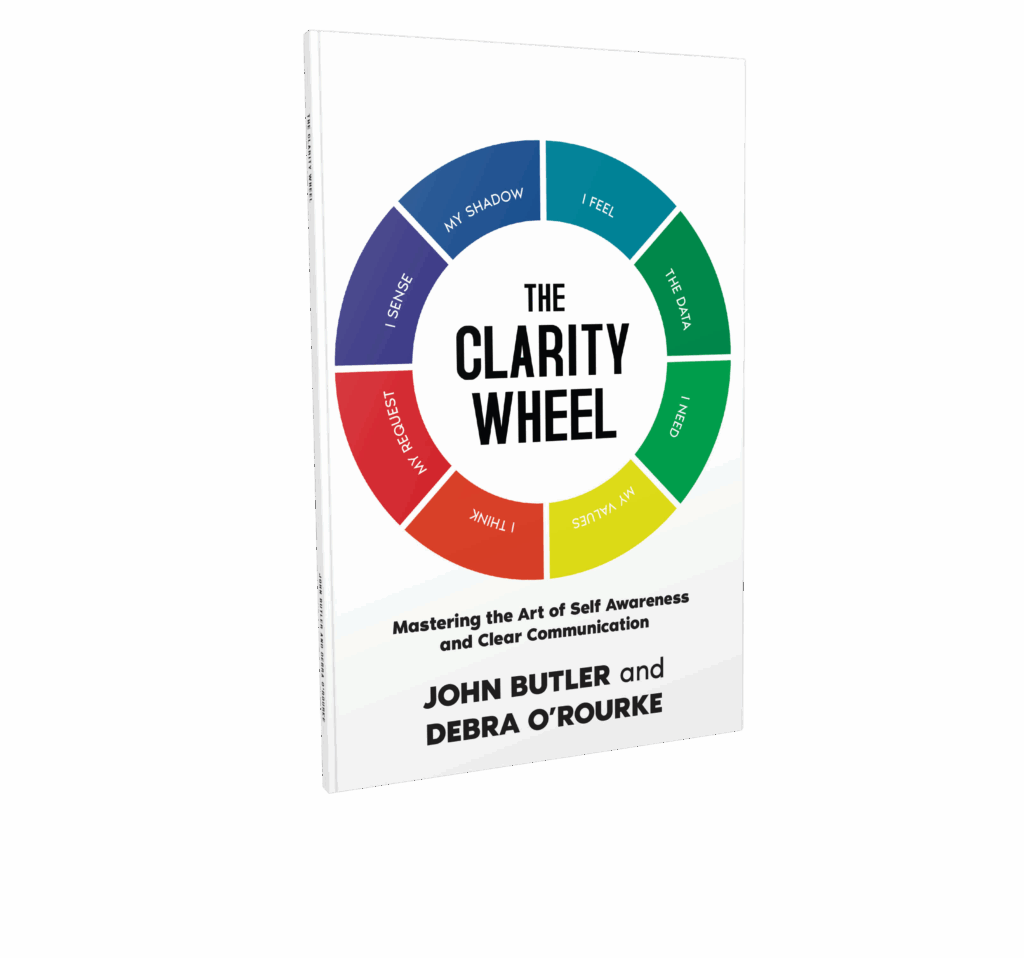
Want to learn more? Buy the book here on Amazon.
Not a subscriber yet?
Discover more from The Clarity Wheel
Subscribe to get the latest posts sent to your email.