
From Conflict to Connection
Conflict doesn’t have to be a dead end; it can actually be a doorway to deeper intimacy if you know how to navigate the threshold.
When things get heated, especially when communicating with men, it is vital to stay grounded with the Clarity Wheel. I often ask myself one guiding question: Did this conflict bring us closer together, or did it push us further apart?
In tense moments, your greatest assets are clarity and emotional regulation. For many men, especially those who haven’t spent much time practicing emotional dialogue, your ability to stay grounded with the Clarity Wheel is the difference between a productive conversation and a total shutdown.
Slow Down to Speed Up
The Navy SEALs have a saying: “Slow is smooth, and smooth is fast.” In communication, we often rush to be heard, which usually results in being misunderstood. The Clarity Wheel is a practical tool designed to help you slow down and stay grounded. By breaking your internal experience into eight distinct segments, you prevent your nervous system (and your partner’s) from becoming overwhelmed.
Breaking the Cycle of Reactivity
Communicating while “triggered” is like trying to drive through a fog bank at 90 mph; it’s going to end in a wreck. When we lead with accusations or high-intensity emotion, we trigger a survival response in our partner:
- Fight: They escalate and get defensive.
- Flight: They withdraw or leave the room.
- Freeze: They shut down and stop processing.
- Fawn: They placate you just to make the tension stop.
None of these lead to authentic closeness. To get a different result, we have to use a different map.
Using the Clarity Wheel as Your Compass
Instead of relying on default habits, try entering the conversation through a specific “wedge” of the Wheel. This creates an immediate opening for vulnerability and collaboration.
1. Lead with Values
Instead of saying, “You’re always dismissive of my point of view,” try sharing what truly matters to you.
Example: “My Values here are connection and healthy conflict resolution. I want this to bring us closer. I’m wondering, what are the values you’re holding right now?”
2. Root Yourself in Data
Arguments often devolve into “he-said, she-said.” Neutralize the tension by sticking to the facts.
Example: “Let’s focus on the Data. Would you like to tell me what you observed first, or should I go?”
This shift transcends the fight over interpretations and invites your partner to become a collaborator rather than an adversary.
Staying with Yourself
Using the Clarity Wheel honors your emotional truth without alienating the person you love. The secret is simple but challenging: we must slow down. Before you speak, stay with yourself long enough to identify your I Sense (physical sensations) and your Shadow (the parts of the story you’d rather not admit). By naming your experience in simple, honest terms and taking turns listening, you invite collaboration instead of defensiveness.
That is how conflict becomes an opening. It’s how you move from “me vs. you” to “us vs. the problem.”
Ready to find your center? Explore the Clarity Wheel segments and learn how to turn your next tense moment into a breakthrough.
How do you typically react in a tense moment? Do you find yourself leaning toward fight, flight, freeze, or fawn?
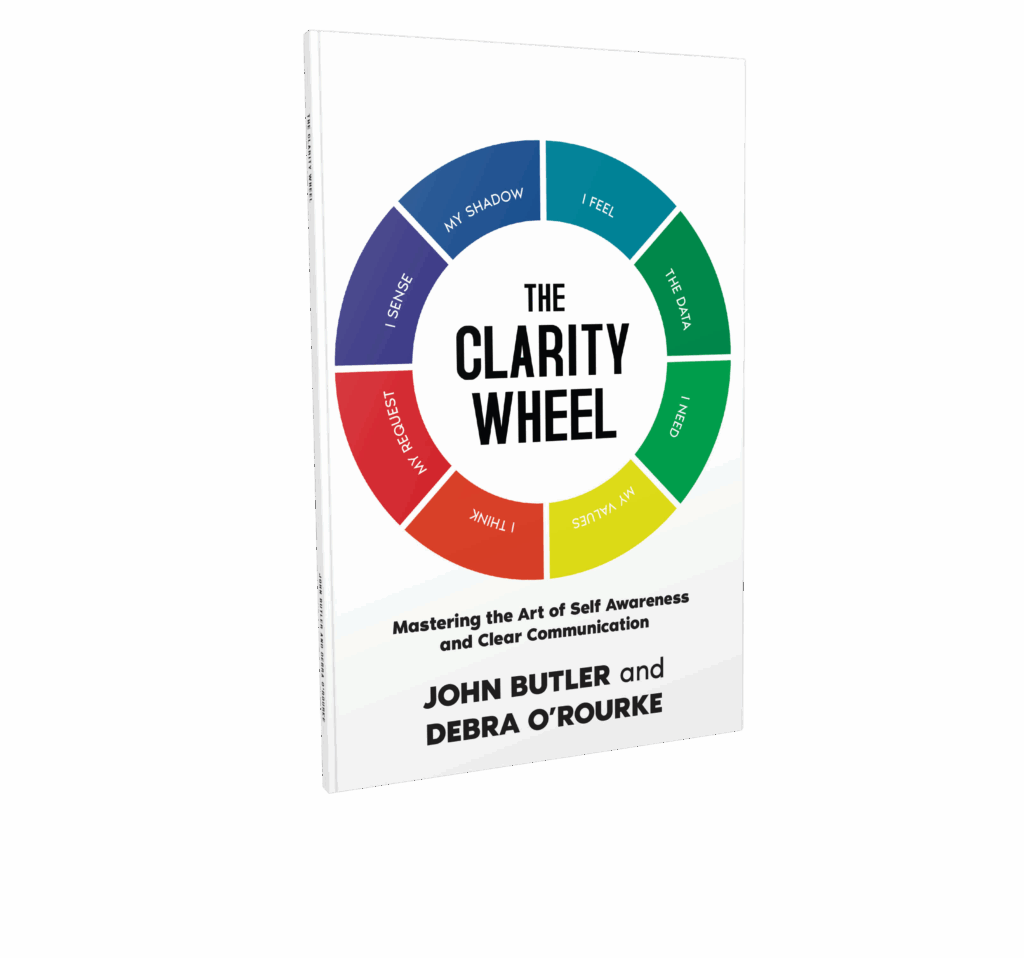
Want to learn more? Purchase the book here on Amazon.
Discover more from The Clarity Wheel
Subscribe to get the latest posts sent to your email.