
Many women feel a sense of frustration when trying to truly connect with the men in their lives, whether they are partners, fathers, sons, or colleagues. It’s easy to feel stuck in a loop of misunderstanding. However, one of the most powerful shifts you can make is moving away from assumptions and toward curiosity, and trading blame for clarity.
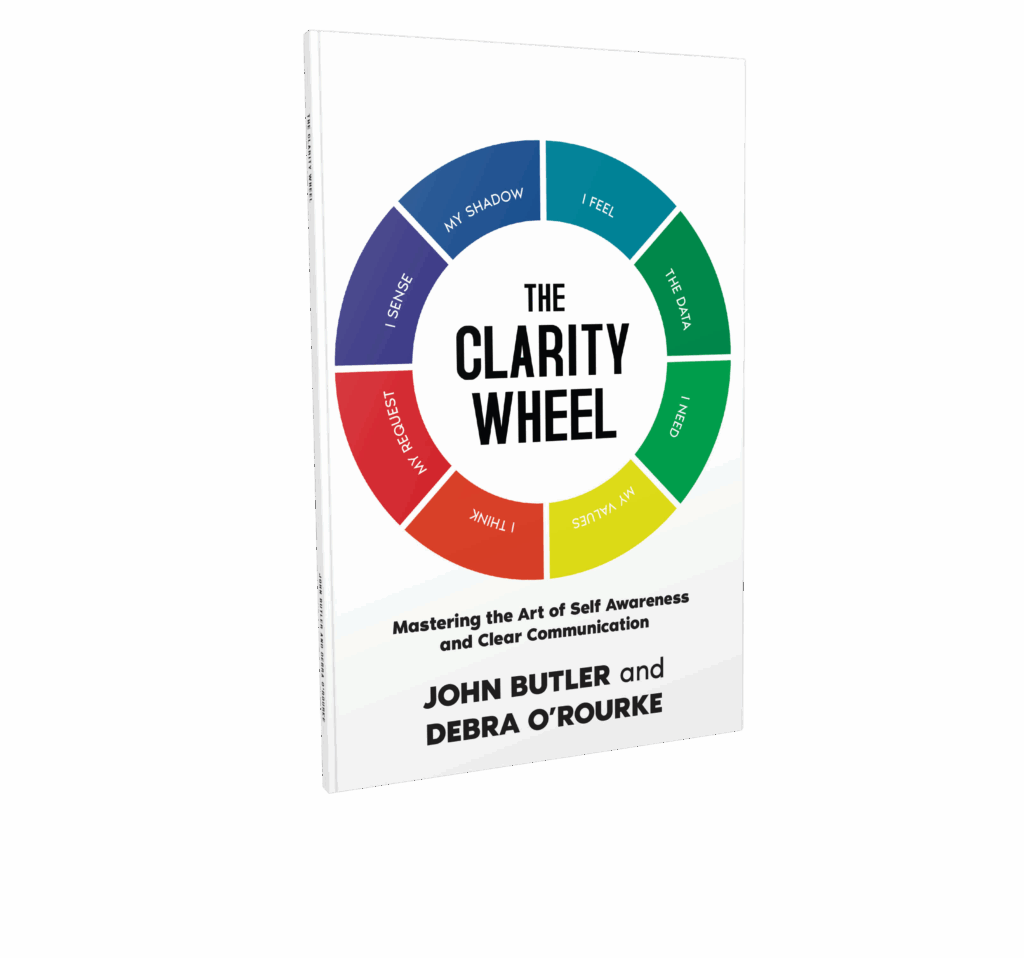
The Clarity Wheel offers a simple, transformative way to navigate these moments. By breaking our internal experience down into eight specific segments, we can communicate from a grounded, centered place:
- Data: Objective facts (what a video camera would record).
- I Sense: Internal physical sensations (like a tight throat or racing heart).
- I Think: Our thoughts, beliefs, and interpretations.
- I Feel: Core emotions (Sad, Angry, Glad, Afraid, Shame).
- Needs: Identifying met or unmet universal needs.
- Values: Our underlying principles and what is important to us.
- Requests: Specific, actionable asks of ourselves or others.
- Shadow: The parts of ourselves we’d rather not acknowledge or show.
When we aren’t clear within ourselves, we can’t expect others to fully connect with what we are trying to say. This is especially true when communicating with men who may have been socialized to suppress their emotions. To bridge that gap, we must first create a communication space that feels emotionally safe.
The Power of the Opening
That safety begins with self-connection. Before you engage, use the Clarity Wheel to identify what is actually happening inside you. When you do speak, do so with the intention to connect, rather than to “win.”
Consider how these different openings might land:
The Attack: “You never listen to me…”
- This is an “I Think” (interpretation) disguised as a fact. It usually triggers defensiveness or withdrawal because the underlying message is: “I am right, and you are bad.”
The “Hidden” Blame: “When I shared about my day and you looked at your phone, I felt discouraged. I really need presence and connection when I’m being vulnerable.”
- Even though this follows a traditional NVC format, it can still feel like you are blaming your partner for failing to meet your expectations. The implicit message often sounds like: “I am important, and you are obligated to pay attention to me.”
The Curious Approach: “I’m curious about what happened for you when I started sharing about my day. I noticed you glance at your phone instead of staying present to our conversation. Can you tell me about that?”
- This is a sincere inquiry. It moves the focus to the Data (the phone glance) and invites the listener to share their perspective. The message here is: “I am interested in learning how to connect more fully with you.”
The Clean Request: “I’d like your input on our communication patterns. When is a good time for us to talk about this?”
- This is an invitation. It honors boundaries by asking for a scheduled time, which reduces the listener’s “deer in the headlights” feeling. It signals: “I respect your time and I value our connection.” If it is a clean request (made without judgmental overtones and accepting of a yes, no, or can we negotiate response) it will likely result in a scheduled and productive conversation about communication and a chance for a deeper connection.
Final Thought
Using the Clarity Wheel is about removing blame and expressing your Needs and Values through respectful behavior and clear Requests. It reminds us that productive communication means honoring the other person’s boundaries just as much as our own.
When we show the respect we wish to receive, we create the communication space necessary for a real breakthrough.
Want to learn more? Buy the book here on Amazon.
Discover more from The Clarity Wheel
Subscribe to get the latest posts sent to your email.